
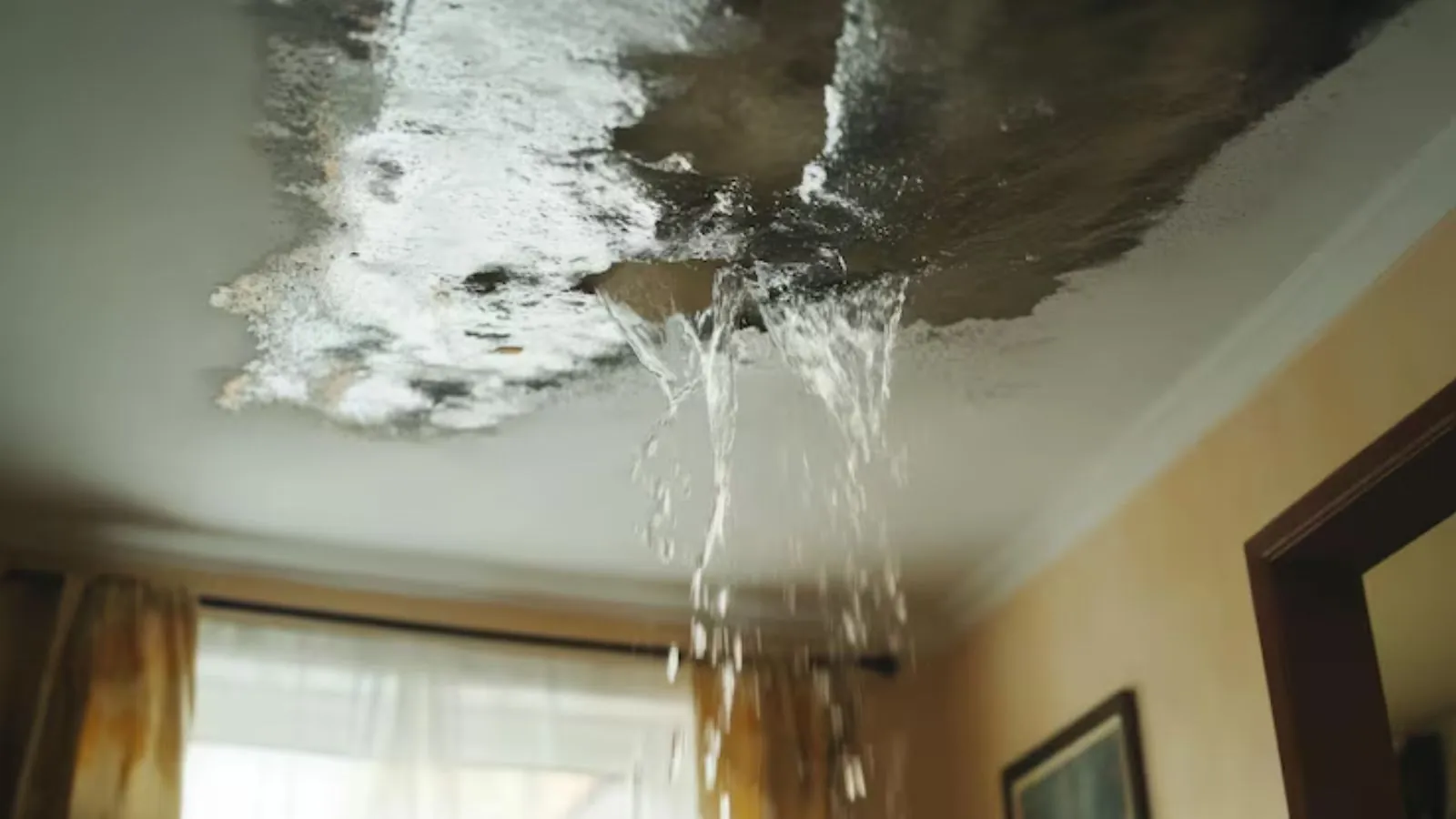
How an air conditioner leaks without a break
Air conditioners remove moisture from the air, and that water leaves through a condensate drain. When the drain line clogs with algae and dust, the pan overflows. The water then soaks insulation, drips onto ceilings or runs down a wall.
This kind of leak is usually slow, so it often goes unnoticed. A brown stain in a hallway ceiling, a damp closet or a musty smell can be the first sign. Call when you see it. A leak caught early is much simpler to dry.
Common causes of AC water damage
- A clogged condensate drain line that backs up into the pan.
- A cracked or rusted drain pan under an attic air handler.
- A frozen evaporator coil that melts and overflows.
- A float switch that failed to shut the system down.
- Sweating ductwork in a hot attic or crawl space.
An HVAC technician fixes the equipment. We dry the damage. If water is coming through a ceiling right now, read our ceiling water damage page, which covers the safe first steps.
What to check and do
If you suspect an AC leak
- Turn off the air conditioner at the thermostat and the breaker.
- Look at the drain pan and the line for standing water.
- Check the ceiling and walls around the air handler for stains.
- Photograph damage and note when the system last ran.
- Call an HVAC technician to clear the line and find the cause.
Do not run the system again until the drain is cleared. Running it can add more water to a wet area, and a frozen coil may need to thaw before anyone can test it.
Wet ceiling under the air handler?
Call us. We will map the moisture and tell you what can be dried in place.
Why attic and closet air handlers cause bigger damage
Many homes in the Naugatuck and Housatonic valley put air handlers in attics or closets above finished rooms. A slow leak there soaks the insulation and ceiling below without any visible sign for days. Insulation holds water against the drywall, so it needs to be checked and often replaced.
Summer humidity in Connecticut gives the system plenty of water to remove, which is why condensate problems tend to show up between June and September. A yearly tune-up and a clear drain line are inexpensive protection.
How we handle an AC leak
Find the wet area
Meters and thermal imaging show how far moisture traveled along ceilings and walls.
Remove wet insulation and drywall
Material that cannot dry is cut out and bagged.
Dry the framing
Air movers and dehumidifiers run until readings are normal.
Prepare for repair
Once dry, ceilings are ready for new drywall and paint. See wall and drywall repair for the finish stage.
Seasonal checks that catch the problem early
Before the cooling season starts, pour a cup of vinegar or ask your technician to flush the condensate line, and look at the pan for rust or standing water. Once a month in summer, glance at the ceiling near the air handler for new color changes. Two minutes of checking is far cheaper than a ceiling replacement.
If you rent your home, tell the landlord in writing when you see a stain, keep a copy and take dated photos. Condensate leaks are easy to dismiss as cosmetic, and a written record protects you if the damage grows.
Mold risk from slow condensate leaks
A slow leak keeps materials damp for a long time, which is the condition mold needs. If you see spotting, smell mustiness or the stain has been there for weeks, have the area checked. Our mold remediation page explains how mold is handled once moisture is under control.
What to do before help arrives
- Switch the system off at the thermostat.
- Place a pan under the drip and protect the floor.
- Do not touch wet ceiling fixtures or wiring.
- Check the condensate drain and the filter if you can reach them.
- Photograph the stain, the unit and any water in the drain pan.
Published guidance from EPA on moisture and mold says wet materials should be dried quickly, and the ANSI/IICRC S500 standard covers the drying side.
AC leak questions
Yes. You can call (844) 950-6900 any time. An AC leak is not always an emergency, but water through a ceiling is, and we will tell you which one you have.
Sometimes. A sudden overflow is treated differently from long-term seepage, and policies vary. Keep photos and ask your insurer.
An HVAC technician. We handle drying, removal of wet material and repair preparation.
It may sag, feel cold and damp or give off a musty smell. A moisture meter or thermal camera gives a reliable answer.
Yes. Have the condensate line cleared once a year, and ask about a float switch that shuts the system off if the pan fills.