
Why do walls stay damp after the water is gone?
Once the standing water is removed, moisture remains inside materials. Drywall, studs, subfloors, insulation and concrete absorb water and release it slowly. Surfaces may feel dry in a day while the inside of a wall is still wet, and that hidden moisture is what leads to swelling, odor and mold.
Structural drying is the controlled removal of that moisture. It uses airflow, dehumidification and measurement, so you know when a building is actually dry, not just when it looks dry.
What the drying equipment does
| Equipment | What it does | Where it is used |
|---|---|---|
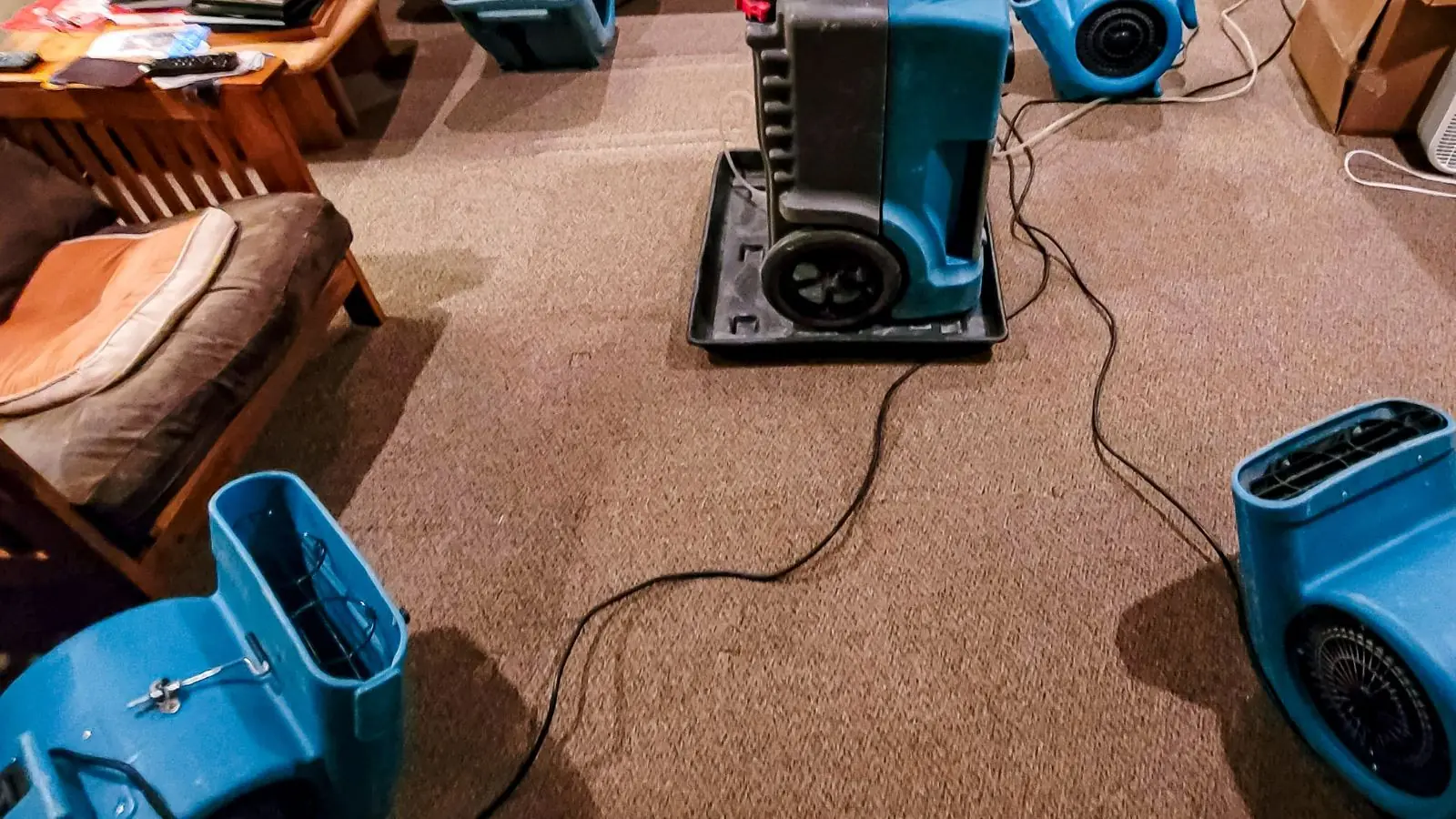
| Air movers | Push air across wet surfaces so moisture evaporates. | Floors, walls, cabinet bases, ceilings. |
| Dehumidifiers | Pull the evaporated moisture out of the air. | Every room being dried. |
| Moisture meters | Read moisture inside drywall, wood and concrete. | Day one and every check after. |
| Thermal cameras | Show temperature patterns that point to damp areas. | Mapping hidden spread. |
| Wall cavity drying | Moves air through opened or drilled cavities. | Behind baseboards and under cabinets. |
Equipment placement depends on the room, the materials and what the readings show. More equipment is not always better. A balanced setup removes moisture steadily without overdrying wood or damaging finishes.
Wet walls or floors that will not dry?
Call us. We will explain what readings to take and how long drying usually runs.
How a drying job runs day to day
Day one: map and set
We take baseline readings, remove what cannot be saved and place equipment.
Daily checks
Readings are repeated, and equipment is moved or removed as areas reach their target.
Reach the dry goal
Materials are compared with a dry reference reading from unaffected areas.
Remove equipment
Once the structure meets its target, equipment is picked up and the space is ready for repair.
How long drying takes
Many small losses dry in about three to five days. Larger losses, thick materials such as hardwood and concrete, and humid weather can take longer. Connecticut summers add moisture to the air, which makes dehumidifiers work harder, while winter heat can dry the air but may also hide wet insulation.
EPA guidance says to dry water-damaged areas within 24 to 48 hours when possible, because mold needs moisture. Starting early matters more than the type of equipment. Starting with proper extraction, as covered on our water extraction page, shortens the drying phase.
Drying in place versus tearing out
Not everything has to come out. Clean-water losses caught early can often be dried in place, which keeps repair costs lower. Contaminated materials, saturated insulation and badly swollen drywall are the usual exceptions. The decision is based on readings, not a guess.
If your water came from a pipe, our burst pipe page shows how drying fits into that job. For wall-specific questions, see our wall and drywall repair page.
Can I rent drying equipment myself?
Callers sometimes ask about renting air movers and dehumidifiers. Consumer-grade units can help on a small, clean spill. For anything larger, the missing piece is measurement. Without meters, it is hard to know whether a wall is dry, and guessing leaves room for mold and odor.
Humidity, weather and the drying plan
The air outside affects the job. On a humid summer day, opening windows can add moisture instead of removing it, so a closed space with dehumidifiers works better. In winter, heated indoor air is dry, which helps, but cold exterior walls can stay damp longer. The plan adjusts to the season and the building.
Residents sometimes turn the thermostat up to speed drying. A warmer room does help evaporation, but heat alone does not remove the moisture from the air. Dehumidification is what carries it out of the building.
What to do before help arrives
- Open interior doors so air can move between rooms.
- Keep the thermostat steady and the home closed up.
- Move small items off wet floors and wall bases.
- Do not run a household vacuum on wet carpet.
- Write down the time you first saw the water.
The ANSI/IICRC S500 standard calls for documented drying goals, and moisture readings are how those are checked.
Structural drying questions
Yes. Call (844) 950-6900 any time. Starting drying sooner makes the job simpler, so do not wait for business hours if water is in the walls.
We compare meter readings with a dry reference from unaffected materials. When they match, the material is dry.
Air movers and dehumidifiers make steady noise, similar to box fans. Equipment runs for several days, so plan for some sound and extra electricity use.
Keep children and pets away from cords and moving air movers. We place equipment with that in mind.
Fast, complete drying lowers the risk. No one can promise mold will not appear, but dry materials do not support it.