
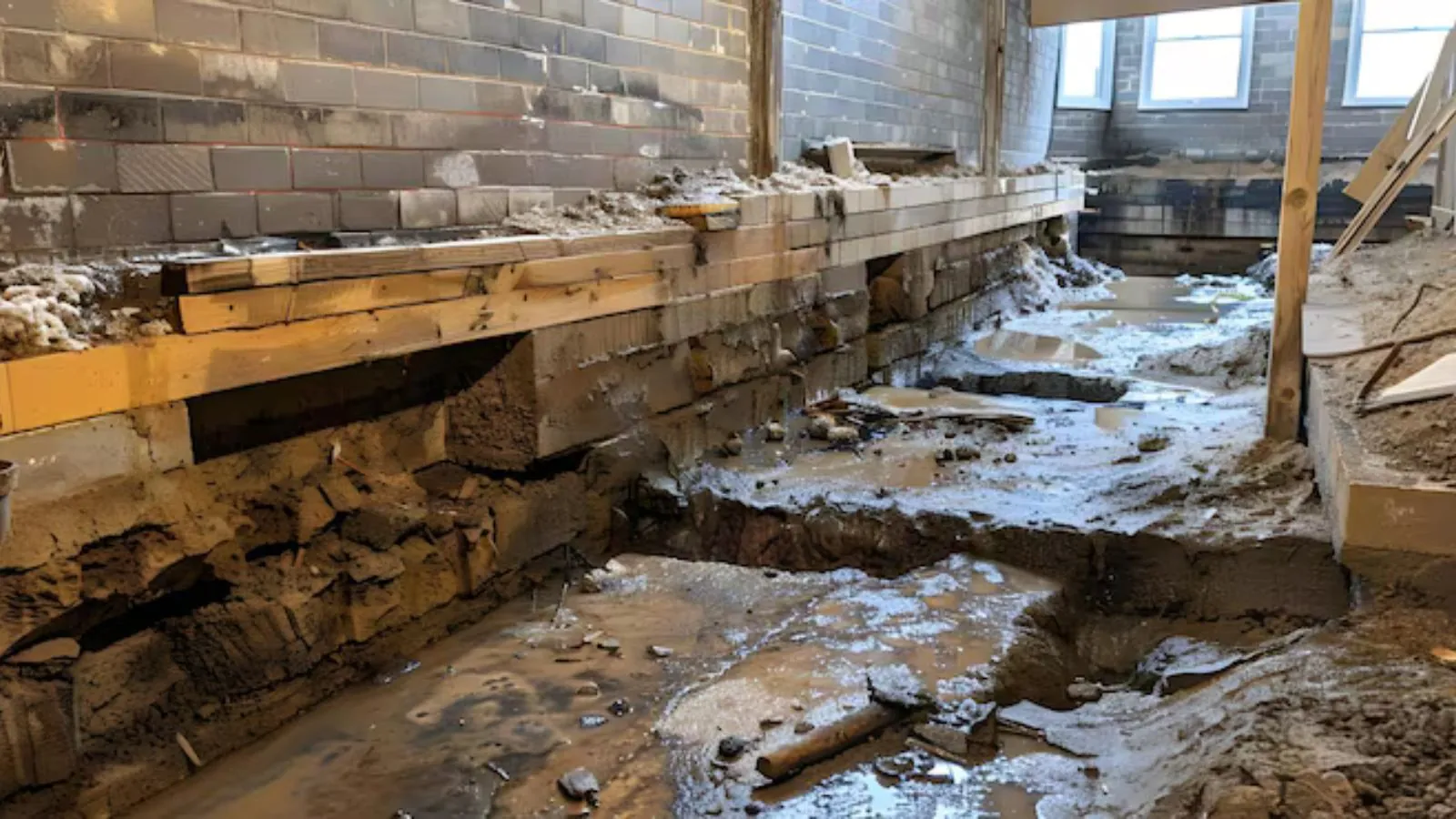
What water in a crawl space does to a house
A crawl space is a low, unfinished area under part of a house. When it takes on water, the damage spreads upward. Moisture rises into the subfloor, insulation and floor joists, and humid air can move into the rooms above.
Common signs include a musty smell in the first-floor rooms, floors that feel cold or soft, buckled hardwood and condensation on ducts or pipes. Many homeowners find out only when they open the access hatch for another reason.
Where the water comes from
Groundwater and runoff
Heavy rain can raise the water table and push water through foundation walls or floors of the crawl space.
Plumbing leaks
A leaking supply or drain line above sends water down through the subfloor into the crawl space.
Condensation
Warm humid air meets cool ducts and pipes and condenses, which is common in summer.
Poor drainage outside
Gutters that dump at the foundation and soil that slopes toward the house feed water to the crawl space.
Water that comes up from the ground is treated as contaminated, so wear gloves and boots if you must enter. If the water came from a pipe, see our burst pipe page for the source steps.
Before you open the crawl space hatch
- Turn off power to the crawl space if wiring or outlets are wet.
- Wear boots, gloves and a mask, and do not enter alone.
- Look for standing water, damp dirt, dripping pipes and matted insulation.
- Photograph conditions before anything is moved.
- Call us for extraction if there is more than a puddle.
Water under the house?
Call the line. We will explain what to look for and how we extract from low spaces.
How crawl space water damage is cleaned up
Pump out standing water
Submersible pumps and wet vacuums remove water from low spots.
Remove wet insulation
Fiberglass batts that have absorbed water lose their value and are removed.
Dry the joists and subfloor
Dehumidifiers and air movers are placed so air reaches framing and the underside of the floor.
Verify dryness
Meter readings on wood confirm the structure is back to normal before anything is closed.
Drying in tight spaces uses the same ideas as our structural drying work, adapted for limited access. The crawl space is not finished living space, so the aim is dry framing and clean air, not cosmetic repair.
Damp crawl spaces and mold
Wood framing in a damp, dark space is a place where mold can start. EPA guidance says mold needs moisture, and the main control is moisture control. If you see growth, our mold remediation page explains the process, and the water source must be corrected first.
A note on waterproofing
Restoration is not waterproofing. We dry and clean after water gets in, and we can point out what we see. Fixing grading, gutters, sump systems or foundation cracks is a different trade, such as a waterproofing contractor or a landscaper.
Heavy rain events like the one on August 18, 2024, which brought just under 10 inches to Shelton and Monroe, test every crawl space and sump system. If your crawl space took water then, the practical lesson is to check drainage before the next storm, not only dry the space after it.
Reference points for crawl spaces
The ANSI/IICRC S500 standard covers drying in confined and hard to reach areas, and the EPA publishes guidance on moisture control in homes. Both stress finding the source of water first. Drying a crawl space while the source still runs wastes time.
Crawl space water questions
Yes. Call (844) 950-6900 any time. Active flooding is an emergency. A damp crawl space with no moving water can wait for normal working hours, and we will tell you which one you have.
Moisture and mold can affect air quality in the home above, and rot weakens framing. Water from the ground can also be contaminated. Treat it carefully.
No. We handle water damage cleanup and drying. Waterproofing and drainage work belong to a waterproofing or foundation contractor.
It depends on the source. A sudden pipe leak is often covered. Groundwater and flooding are commonly excluded, so check your policy.
Meter readings on joists and subfloor, along with air humidity checks, show whether the space is back to normal.