
Signs water is inside a wall
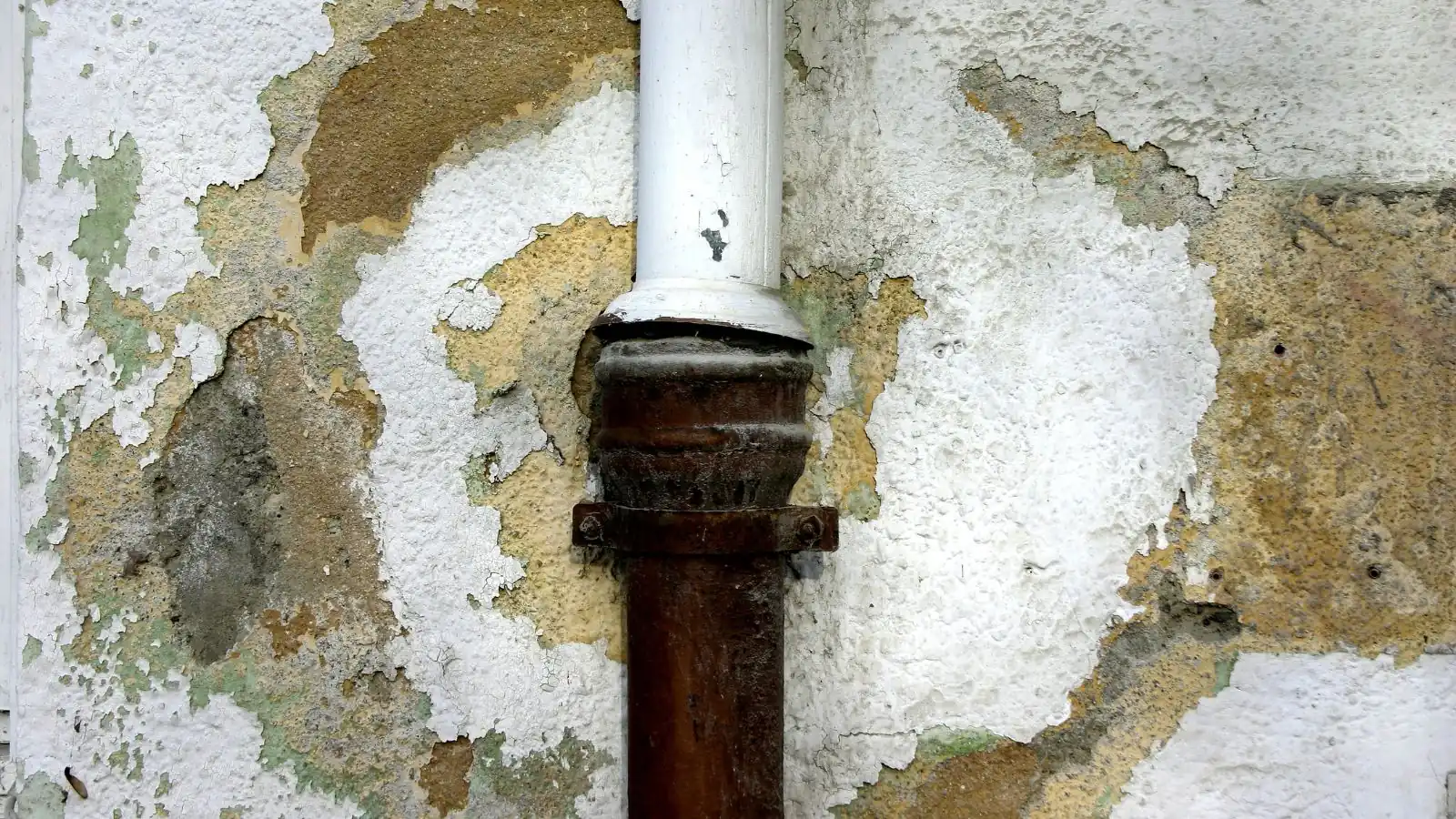
Bubbling or peeling paint
Moisture pushes paint off the drywall paper from behind.
Soft or crumbling drywall
Gypsum loses strength when wet. Press gently on a stain. If it gives, it is wet.
Stains and ring marks
Brown rings show where water traveled and dried. Fresh rings mean ongoing moisture.
Musty smell or warm damp spots
Moisture trapped in a cavity often smells before it shows.
If you see these signs, find the source and stop it. Moisture meters and thermal cameras show how far the water went. A small stain on the outside can hide a large wet area inside the cavity.
Should drywall be dried or cut out?
It depends on what the water was, how long it sat and how the drywall looks. Clean water caught early can often be dried in place with air movers and dehumidifiers. Drywall that has swollen, sagged or crumbled does not regain strength. Contaminated water means removal.
| Drywall condition | Usual decision |
|---|---|
| Damp, firm, clean water, caught early | Dry in place and recheck. |
| Swollen at seams or soft at the bottom | Cut out the damaged section. |
| Wet insulation behind it | Remove and replace insulation, then dry the cavity. |
| Contaminated water or visible mold | Remove affected material and treat the cavity. |
Water that came down from above is covered on our ceiling water damage page. For burst-line damage in walls, see our burst pipe page.
Wet or stained wall?
Call us. We will read the moisture and tell you what is safe to dry in place.
How we handle wall damage
Stop the source
A plumber or contractor fixes the leak.
Map the moisture
Readings show how high the water climbed and which walls are wet.
Open the cavity
Baseboards come off and small holes or cuts give air access to the cavity.
Dry and verify
Air movers and dehumidifiers run until readings return to normal. See structural drying.
Leave ready for repair
New drywall, taping, texture and paint can follow once the wall is dry.
Cut lines, baseboards and paint
When drywall is removed, we cut above the waterline with straight lines, since straight cuts are easier to patch. Baseboards and trim are carefully removed when possible so they can be reused. Paint and wallpaper cannot trap or hide moisture, so they are removed from wet areas.
Water often wicks upward 12 to 24 inches above the visible line. That is why a clean cut a bit above the stain is better than patching the stain itself.
Hidden damage in older Connecticut homes
Shelton has many mid-century and older houses with plaster, lath and layered wall finishes. Old plaster can hide moisture longer than modern drywall, and cavities may have older insulation. If your home predates the 1980s, older materials may be present, and a contractor should check before disturbing walls. A licensed professional can advise on testing.
What a drywall repair involves after drying
Once readings are normal, new drywall is hung and the seams are taped and finished. Texture and primer follow, then paint. Matching an older texture takes care, so ask your painter to sample it before the wall is closed. Repairs on a ceiling or on a long wall often need a full-height blend to avoid visible patches.
Insulation goes back before the board does. If the cavity held fiberglass, new batts are fitted without gaps. Skipping that step leaves a cold spot that can sweat in winter and bring moisture back.
What to do before help arrives
- Turn off power to outlets and switches on a wet wall.
- Stop the water source if you can find it.
- Take down pictures and move furniture away from the wall.
- Do not paint or caulk over a wet wall.
- Photograph the stain and mark its edge with a pencil.
The ANSI/IICRC S500 standard guides whether drywall is dried in place or removed.
Wall and drywall questions
Yes. Call (844) 950-6900 any time. If water is still entering a wall, call right away.
Not until the wall is dry and the source is fixed. Painting over a damp wall hides the problem and can trap moisture.
Moisture meters and thermal imaging show wet areas through the surface, so we can mark the extent before cutting.
We dry and prepare the wall for repair. Drywall finishing and paint are scoped and quoted separately from drying.
Usually yes. Insulation holds water against the wall and does not dry well in a closed cavity.