
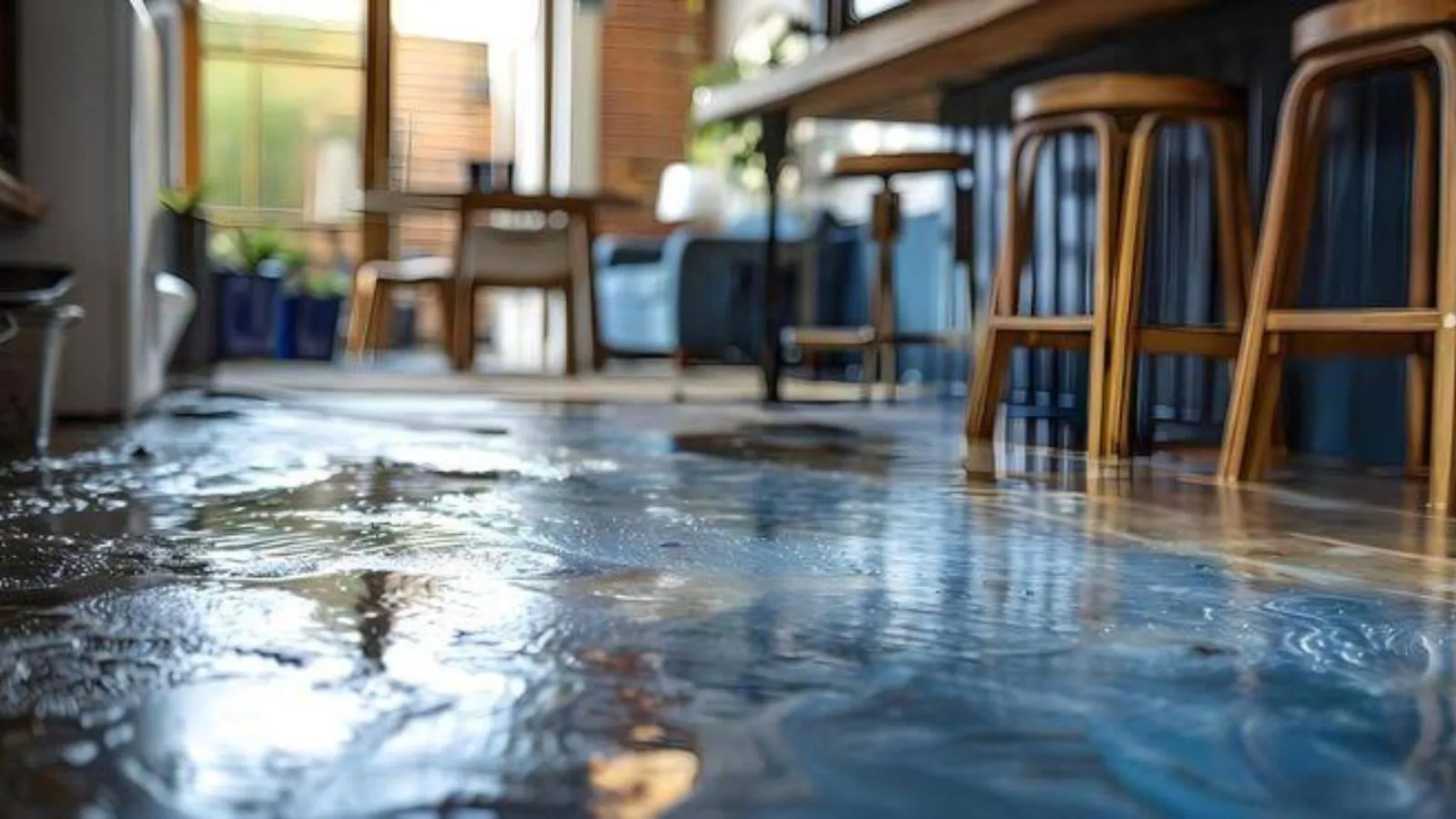
Why kitchens are a water damage hotspot
Kitchens combine water supply lines, drain lines, a dishwasher, often a refrigerator ice maker and a lot of enclosed cabinet space. A small leak can run for days inside a cabinet base before anyone sees it. By then, the particleboard has swelled and the subfloor is wet.
The most common sources are the sink supply lines and drain, the dishwasher inlet and door seal, and the refrigerator water line. Each leaks in a different place, so tracing the water path comes first.
What gets damaged in a kitchen leak
Cabinet bases and toe kicks
Particleboard swells and breaks down when wet. Solid wood and plywood often survive if dried quickly.
Subfloor and underlayment
Water pools under the cabinets and soaks the layers below.
Flooring
Vinyl, laminate and wood react in different ways, and tile may be fine while the layers below are wet.
Drywall behind the cabinets
Lower wall sections wick water and may need to be cut out.
Cabinet toe kicks and sink bases hold moisture, so we open or remove them to reach the cavity. Our appliance leak page covers dishwasher and fridge leaks in more detail, and our hardwood floor page covers what to do if the flooring is wood.
Wet cabinets or a soft kitchen floor?
Call us. We will explain what can be dried in place and what must be removed.
What to do in the first hour
Kitchen leak first steps
- Close the sink supply valves or the main.
- Empty the cabinet under the leak and set items on dry surfaces.
- Unplug the dishwasher or refrigerator if the floor is dry enough to reach them.
- Remove the toe kick if possible and look for water behind it.
- Photograph the damage and the source.
Do not turn on the dishwasher or the sink again until the leak is fixed. Running a leaking appliance adds more water to a wet area and makes the cleanup harder.
How we restore a kitchen after water damage
Find and stop the leak
A plumber or appliance technician repairs the source.
Extract and open
Standing water is removed, and toe kicks, baseboards and sink bases are opened.
Dry cabinets and floors
Equipment runs with daily readings. See our structural drying page.
Prepare for rebuild
Once dry, cabinets, flooring and trim can be repaired or replaced.
Repair versus replace for cabinets
Solid wood and plywood cabinets that were wet briefly can often be dried and kept. Particleboard cabinets that swelled usually cannot be restored and are replaced. The decision is practical, since a swollen cabinet base loses strength and holds odor.
Countertops are often reused if cabinets can be detached with care. Matching cabinet lines can be hard, so ask your contractor about options before demolition starts.
Insurance and kitchen leaks
Many policies cover sudden kitchen leaks, but they often exclude long-term seepage. A line that dripped for weeks can fall into the exclusion, while a burst hose usually does not. Keep the failed part if you can, and take photos before anything is removed.
Appliances and plumbing to check after the cleanup
- Replace old rubber supply lines with braided stainless lines.
- Check the shutoff valves under the sink and make sure they turn and seal.
- Look at the dishwasher drain loop and the door gasket.
- Inspect the refrigerator line for kinks, and make sure the valve is not weeping.
- Clear and test the garbage disposal connection.
A plumber can do all of these in one visit. Doing them before the cabinets go back saves opening them up again later.
Reference points for kitchens
Dishwasher, sink and refrigerator water is classed under the ANSI/IICRC S500 standard by how clean it was when it escaped. Cabinets and subfloors hold moisture longer than the surface suggests. Moisture readings are the only reliable way to know when they are dry.
Kitchen water damage questions
Yes. Call (844) 950-6900 any time. A leak that is still running is urgent, and we can walk you through the first steps.
Not always. Solid wood and plywood often dry well. Swollen particleboard usually has to be replaced.
Often yes. We open toe kicks and drill small ports so air reaches the cavity. Readings tell us whether that is enough.
It depends on the flooring and the time water sat. Tile on a dry subfloor is often fine. Wood and laminate depend on readings.
Drying usually takes several days. Repairs depend on what was removed, and we can explain the sequence.