
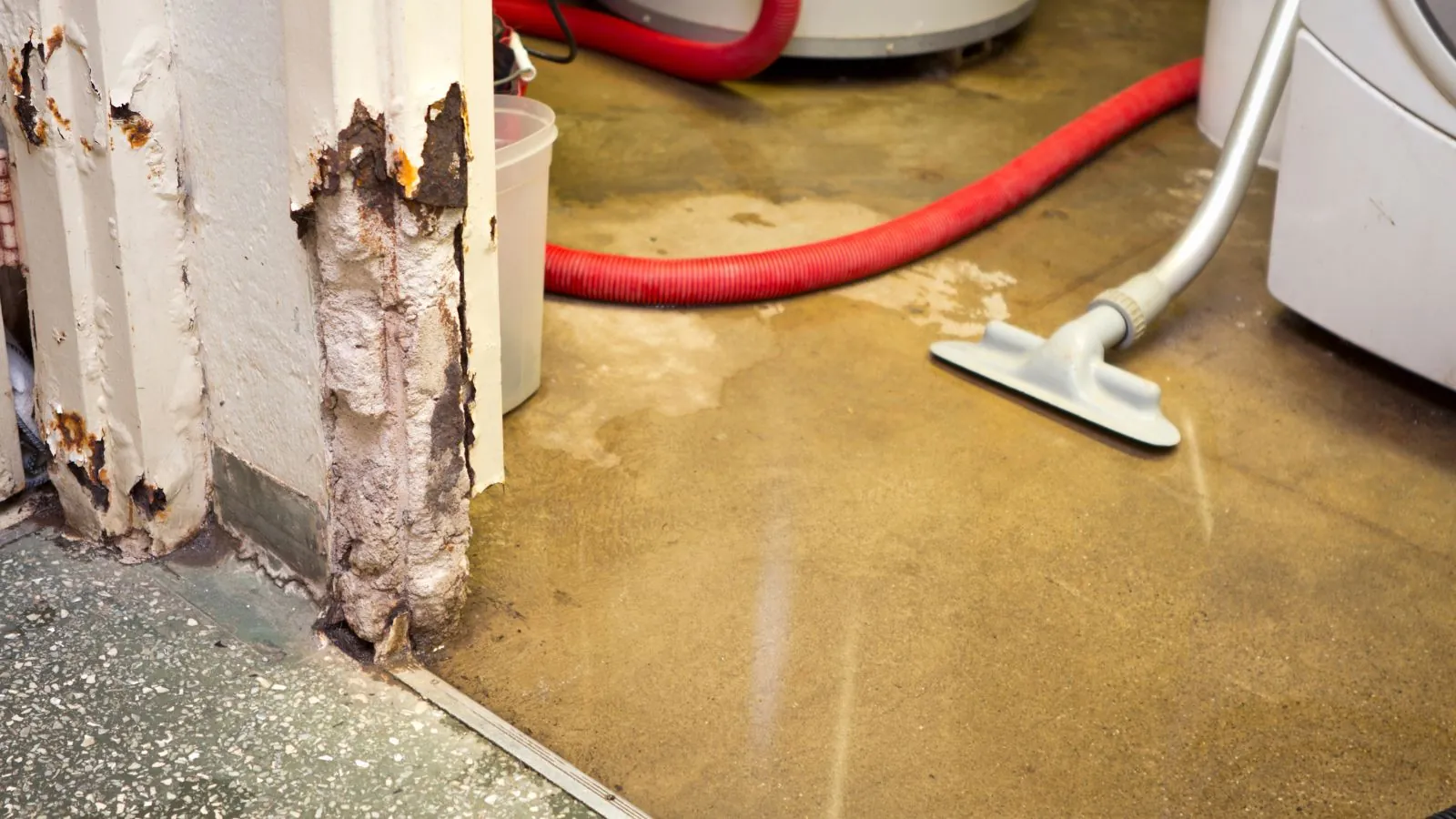
Water heater leaking: shut it down safely
A water heater leak ranges from a slow drip at a fitting to a split tank that empties on the floor. The first job is to cut the supply. Close the cold-water inlet valve on top of the unit, and if you have a gas unit, set the gas control to off. For an electric unit, turn off its breaker.
Hot water can scald, so do not touch the tank or drain it by hand while it is hot. A heater in a basement corner often has a floor drain nearby, and that may handle a small release. A larger release needs extraction before water spreads under walls.
Steps for a leaking water heater
- Close the cold-water inlet valve above the heater.
- Switch off the electric breaker or turn the gas control to off.
- Keep clear of hot water, and do not stand in water near the electrical panel.
- Move stored boxes and furniture out of the wet area.
- Photograph the unit, the label and the floor before cleanup.
Water heater flooding the floor?
Call the 24/7 line. We will help with extraction and drying while you arrange the replacement.
Tank leaks, fitting leaks and relief valve leaks
| Where it leaks | Usually means | What happens next |
|---|---|---|
| From the tank body or base | The tank has corroded through. | The unit is replaced and the area dried. |
| At inlet or outlet pipes | A fitting or connector is loose or worn. | A plumber repairs it, and wet materials are dried. |
| From the relief valve pipe | Pressure or temperature is too high. | A plumber checks the valve and the pressure. |
| From the drain valve | The valve is worn or loose. | A plumber replaces it, and the pan or floor is dried. |
The repair or replacement belongs to a plumber. Our work is the water: extraction, drying and a record of what was wet. We coordinate timing so wet materials are not covered while a plumber works.
Why basements and closets make it worse
Most heaters sit in basements, utility closets or garages, and those spaces collect water at low points. A slab with a slight slope can send water across the whole floor and under finished walls. In finished basements, carpet, baseboards and the bottom of drywall wick it up fast.
If your heater sits in a finished lower level, our basement water damage page explains what a wider spread looks like. For pooling water on hard floors, the water extraction page describes the equipment and steps.
How the cleanup runs
Verify the leak is stopped
We confirm the inlet is closed and the unit is isolated.
Extract and inspect
Water is pulled from floors and low cavities, and moisture is mapped.
Remove wet materials
Soaked carpet pad, baseboard and lower drywall are removed if they cannot dry.
Dry and record
Equipment runs until meters read normal, and readings are kept for your file.
Older tanks and the sediment problem
Tank heaters wear out over years. Sediment builds on the bottom, the lining degrades and a rusted tank can fail without much warning. A puddle at the base, rust streaks or rumbling noises are signs to have the unit checked. Many homeowners replace a tank before it fails, and that is a plumber's call.
Aquarion Water Company serves Shelton, and the household side of the plumbing is the owner's responsibility. A sudden rise in your water bill without an obvious cause can point to a hidden leak, including at a heater fitting.
Insurance and records
Coverage for a failed water heater varies. Many policies cover the resulting water damage when the failure is sudden, while the heater itself may be treated as wear. Keep photos of the label, the leak and the damage, and ask your insurer what it needs.
Reference points for tank leaks
Water from a tank is usually treated as clean at first under the ANSI/IICRC S500 standard. Gas, electric and plumbing work on the heater is governed by manufacturer instructions and local code. A licensed plumber handles the replacement.
Water heater leak questions
Yes. Our dispatch line runs around the clock. Call (844) 950-6900 and tell us how much water is on the floor and what the heater sits on.
If it is leaking badly, closing the inlet and shutting off power or gas comes first. Draining hot water can scald, so let a plumber do it unless you know how.
If water reached carpet, drywall or a subfloor, yes. A small spill on bare concrete may only need a towel and a fan, and we will say so.
A plumber. We handle extraction, drying and cleanup, and we coordinate so wet materials are dealt with at the right time.
Moisture left in drywall, carpet or wood can support mold. Drying within a day or two is the main defense, and we check readings to confirm.