
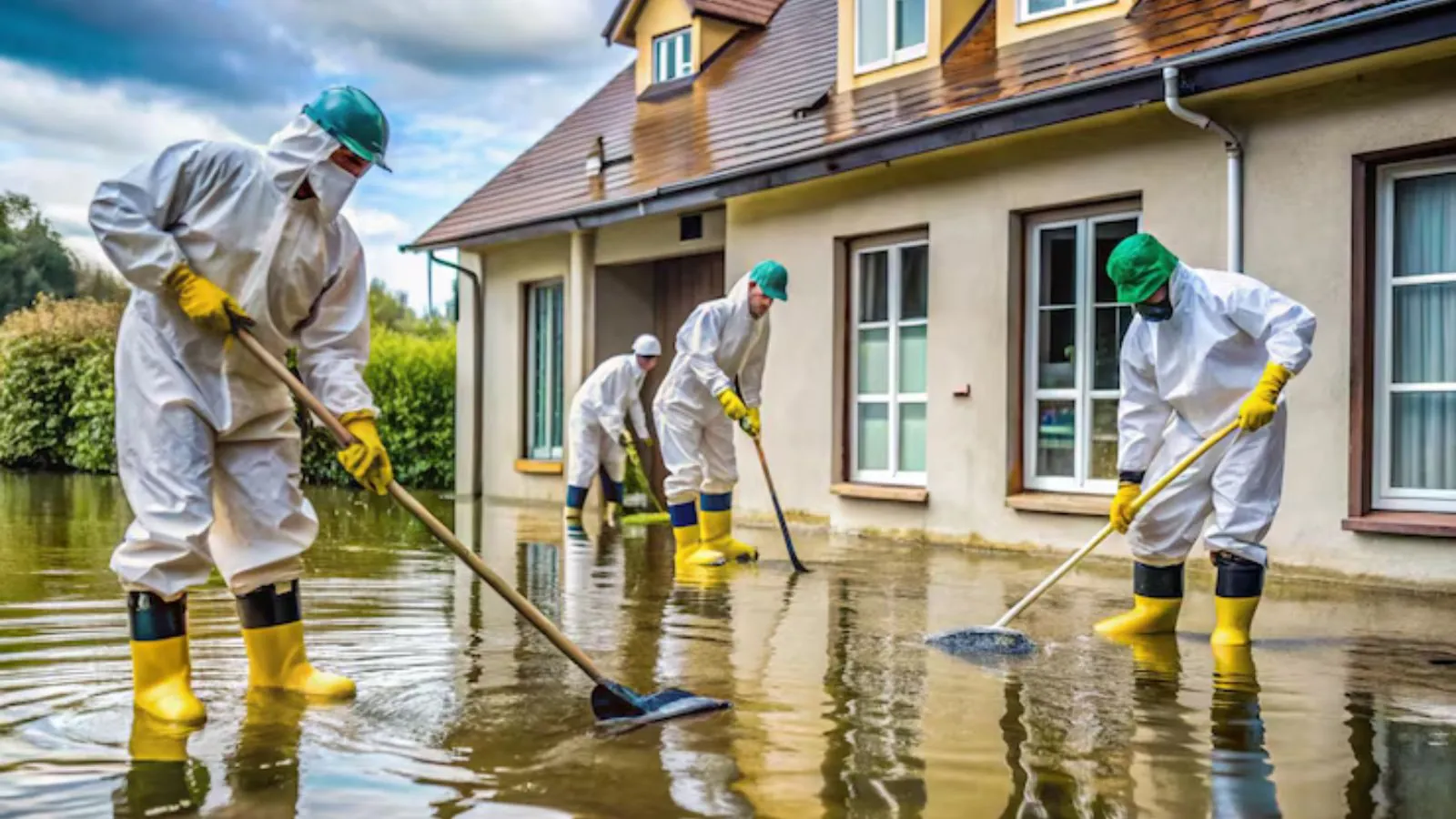
Sewage coming up through a floor drain or toilet?
Sewage in a drain, toilet or tub is a health hazard. It can contain bacteria, viruses and parasites. The first rule is to keep people and pets away, stop using water, and avoid touching the water without proper protection.
Stop running sinks, showers, washers and flushing toilets, because every drop you send down the line can come up elsewhere. Close the door to the affected room if you can, and wash your hands well after any contact.
What to do right now
- Stop using water throughout the house until the line is cleared.
- Keep children, pets and anyone with health risks away from the area.
- Do not use a household vacuum or fans that spread contamination.
- Turn off power to the area if water is near outlets or appliances.
- Do not eat or drink anything that touched the water.
- Call a plumber for the blockage and us for cleanup.
Sewage on the floor?
Call the 24/7 line. We will explain what to keep away from and how we handle the cleanup.
Why sewage backs up
A clog in your own line
Grease, roots, wipes and collapsed pipe can block the lateral that carries waste from your house.
A problem in the public main
A blocked or overloaded municipal sewer can push waste back toward homes at low points.
Heavy rain and groundwater
Stormwater entering the system can overload it. Basements and floor drains see it first.
A failed sump or ejector pump
Homes with lower-level bathrooms rely on pumps, and a failure can leave waste in a pit.
In Shelton, the Water Pollution Control Authority runs the public sanitary sewer, which covers more than 120 miles of lines. If the problem is in the street main and not your line, the first call should be to the authority. A plumber can tell you whether the blockage is on your side. Many homes in Orange and Oxford use septic systems instead, which have their own failure modes.
How sewage cleanup is different
Sewage is Category 3 water. Porous materials it touches, such as carpet, pad, drywall and insulation, are generally removed instead of dried, because they cannot be fully cleaned. Hard surfaces are cleaned and treated, and the area is dried.
Contain and protect
We set up protective measures so contamination does not spread to clean rooms.
Extract and remove
Liquid is pumped out. Contaminated porous materials are cut out and bagged for disposal.
Clean and treat
Surfaces are cleaned and treated with products suited to the surface.
Dry and verify
Air movers and dehumidifiers run as described on our structural drying page.
Standing sewage water is also a flood-type hazard. Our flood damage page covers the safety steps that apply, and our basement page covers what a lower-level loss looks like.
What you should not try yourself
Do not use bleach on sewage-soaked materials hoping to disinfect them, and never mix bleach with ammonia or other cleaners, since toxic gas can form. Do not try to dry soaked carpet in place. These steps feel helpful and often make the problem worse.
Insurance and sewage
Many homeowners policies exclude sewer backup unless an endorsement is added. Check whether you carry one. Even if you do not, documentation matters. Photograph the water, the source and the damage, and keep notes of who you called and when.
Published guidance on sewage
The ANSI/IICRC S500 standard classes sewage as Category 3, which means it is grossly contaminated. The CDC publishes guidance on cleanup after sewage and flood events. Both point toward removing porous materials the sewage touched.
Sewage backup questions
Yes. Our dispatch line runs 24/7. Call (844) 950-6900 and tell us where the sewage is and how much.
Both. A plumber clears the blockage and finds the cause. We handle extraction and cleanup, and we can work alongside the plumber.
Small spills on hard surfaces can be handled with proper protection. Anything that soaked carpet or drywall should be handled by a trained crew.
Sewage odor means there may be contaminants in the air and on surfaces. Ventilate and stay out of the area until it is cleaned.
Only if your policy includes sewer or drain backup coverage. It is often an add-on, so read your declarations page.