
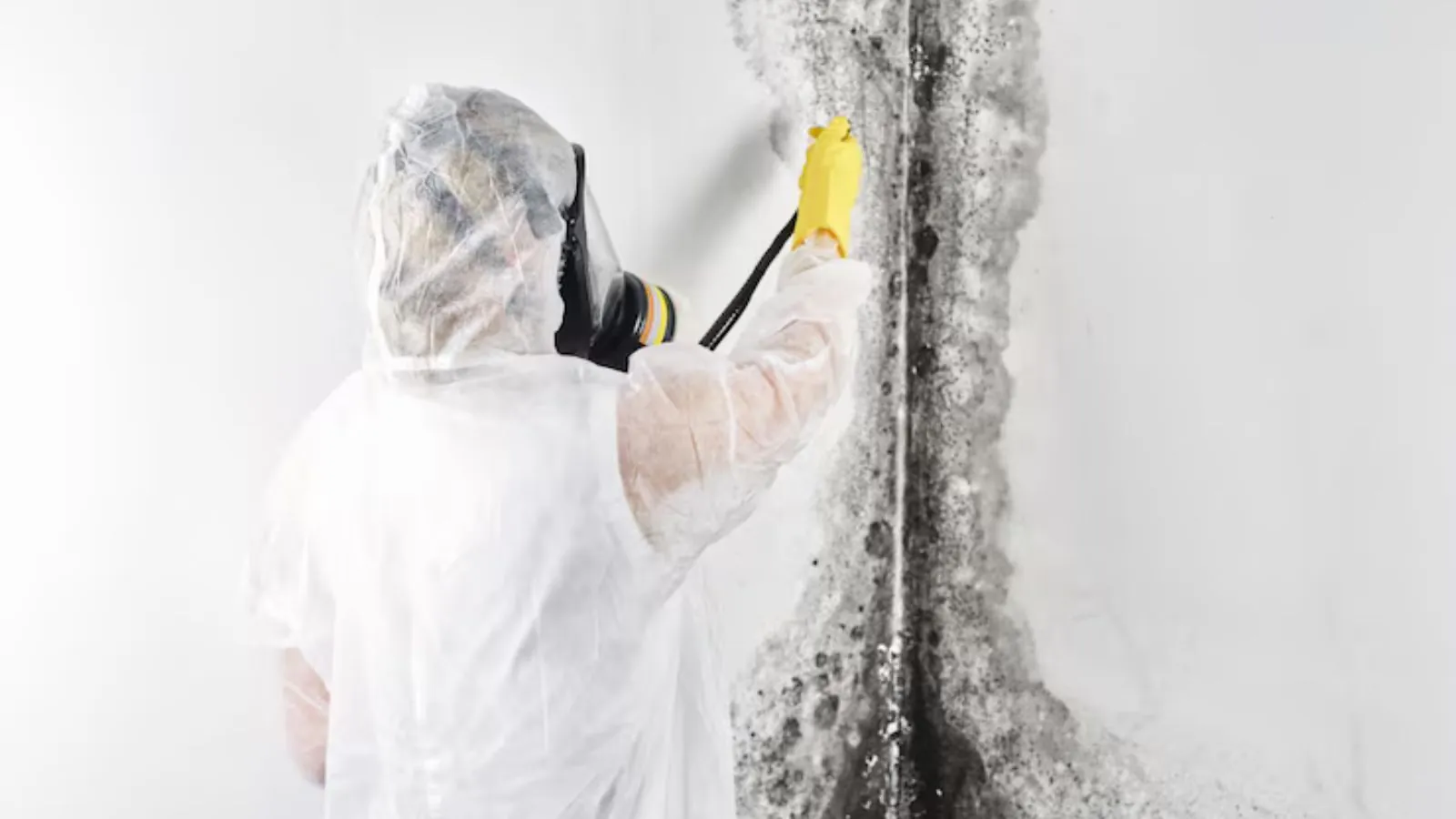
What you are probably looking at
Dark spots on a bathroom ceiling, grout or caulk are usually mold or mildew growing on a damp surface. Bathrooms produce the moisture and the warmth it likes. Soap film and skin cells provide the food.
The color alone does not tell you much. Mold can be black, green, white or gray, and you cannot identify a type by sight. What you can do is look at where it is and why that spot stays wet.
Read the location
Ceiling above the shower
Steam rises and condenses on the coolest surface. This points to weak ventilation.
Corner where wall meets ceiling
Cold exterior walls collect condensation, especially in winter.
Along the tub or shower caulk
Water gets behind failed caulk, and the growth is on the surface and behind it.
Around the toilet base or under the sink
These can point to a slow leak at a seal or supply line.
If the spots are limited to the surface and the drywall is firm, ventilation and cleaning may be enough. If the drywall is soft, bubbling or stained from the other side, you likely have a leak. Our wall and drywall page explains what wet drywall looks like.
Do you need a test?
A test can tell you whether spores are in the air or on a surface and sometimes what kind. It cannot tell you why the area is wet, and it does not replace fixing the moisture. Ask what decision the test would change. If the answer is that you would clean and dry the area either way, the money may be better spent on a leak check.
Independent testing after a cleanup is a different matter. A buyer, lender or landlord may ask for it, and it is normally done by a separate party. Whether you need one is a question for them.
Steps to take this week
A practical plan
- Look for the source of moisture, such as a leak, a poor fan or condensation.
- Fix the source before cleaning, or the growth returns.
- Clean small hard-surface areas with detergent and water, wearing gloves and eye protection.
- Replace failed caulk and dry the joint fully.
- Check the ceiling or room below for stains.
- Call for an assessment if the area is large or the material is soft.
Do not mix bleach with ammonia or other cleaners. EPA guidance also advises against painting over mold, since paint does not solve a moisture problem.
When the problem is bigger than the bathroom
A bathroom that leaks can damage the room below. A ceiling stain in a kitchen or hallway under a bathroom is a sign that water has traveled. That is covered on our ceiling water damage page. A long-running leak can also soak the subfloor and framing, and those materials need drying or replacement.
If you find extensive growth, a musty smell that spreads or materials that stay damp after you fix the source, a professional assessment is a reasonable step. Our mold remediation page describes how that works.
What we avoid saying about mold
People often ask whether a certain mold is dangerous. We do not give health advice, and you should not expect a restoration contractor to. If you or someone in your home has health concerns, talk to a doctor. Our role is moisture, removal of affected material and drying.
Mildew, mold and soap scum: telling them apart
Pink or orange film in a shower is often a bacterial residue, not mold. Gray fuzz on a shower curtain is usually mildew, a surface growth that wipes off. Soap scum is chalky and white. These look different from growth that is embedded in grout, ceiling paint or drywall.
The practical test is whether it comes off with detergent and returns within days. If it keeps returning, the room is too damp or a leak is feeding it. Fix that cause, since cleaning alone is a treadmill.
A simple moisture log
For two weeks, check the same spots each morning. Note whether the ceiling feels damp, whether the fan ran and whether the mirror stays fogged. A pattern shows up quickly. If the fan was on and the room still stays wet, the fan is too weak or vented poorly.
Tenants, owners and shared buildings
In a condo or an apartment, a leak from a neighbor's bathroom can feed mold on your wall. Tell your landlord or association in writing, and include dated photos. Ownership of the repair depends on where the leak starts, and a short written trail helps everyone sort it out.
If you own the unit, check whether the association's master policy or your own policy responds first. A pipe in a shared wall can involve both, so ask before you start repairs.
Keeping the bathroom dry day to day
A few habits do more than any product. Run the fan during every shower and for twenty minutes after. Squeegee the glass and wipe the tub edge. Hang towels so they dry fully, and wash bath mats often.
Check the caulk twice a year. Cracked or peeling caulk lets water behind the tile, where you cannot see it. Replacing a bead takes an afternoon and costs little compared with opening a wall.
Published guidance on mold
According to the EPA's guide A Brief Guide to Mold, Moisture and Your Home, moisture control is the key to mold control. That matches what restoration crews see, since cleaning without drying does not last.
Humidity, old plumbing and bathrooms in the Shelton area
The Connecticut Department of Public Health says there is no state mold license, so a contractor's registration and written scope matter more than a mold label. The Department of Consumer Protection registers home improvement contractors, including a mold remediator status, and it offers a lookup you can use before signing.
If your bathroom is in a house in Orange or Oxford on a septic system or a private well, remember that a leaking fixture also adds load to the system. Fixing leaks protects both the building and the septic field.
Local bathroom mold questions
Usually not. A leak behind it might be, so shut the water off if you find one and call a plumber. Mold itself needs moisture control and cleanup.
Detergent and water with careful drying is the usual start for hard surfaces. Never mix bleach with ammonia or other cleaners, and do not rely on spraying to fix a moisture problem.
Landlord duties vary by situation. Give written notice, keep a copy and take dated photos, and see our guide for renters if you need help.
If it is soft, stained from behind or keeps growing mold after cleaning, yes. Firm drywall with only surface growth can sometimes be cleaned.