
What the smell is telling you
A musty smell usually means something is damp and has been for a while. Microbes grow on wet materials and give off odors as they do. Air fresheners, candles and sprays hide the smell for a few hours, and it comes back because the moisture is still there.
The fix is to find what is wet, dry or remove it and clean the area. If you do those three things, the smell usually fades on its own.
Where to look
| Where the smell is strongest | What to suspect |
|---|---|
| Basement or lower level | Damp carpet, wet drywall, a slab that never dried, a floor drain. |
| Behind or under cabinets | A slow leak at a supply line or dishwasher. |
| Closet on an exterior wall | Condensation or a leak in the wall. |
| Near a ceiling stain | A roof, plumbing or AC leak above. |
| Whole house when the system runs | Moisture in the ducts or a wet coil pan. |
Use your nose and a flashlight. Check behind furniture, under rugs and inside cabinets. Press on drywall and baseboards to find soft or swollen areas. A moisture meter or thermal camera finds damp areas you cannot see.
Steps to remove the odor
Find and stop the source
A leak, a gutter or a drain must be fixed first.
Dry the space
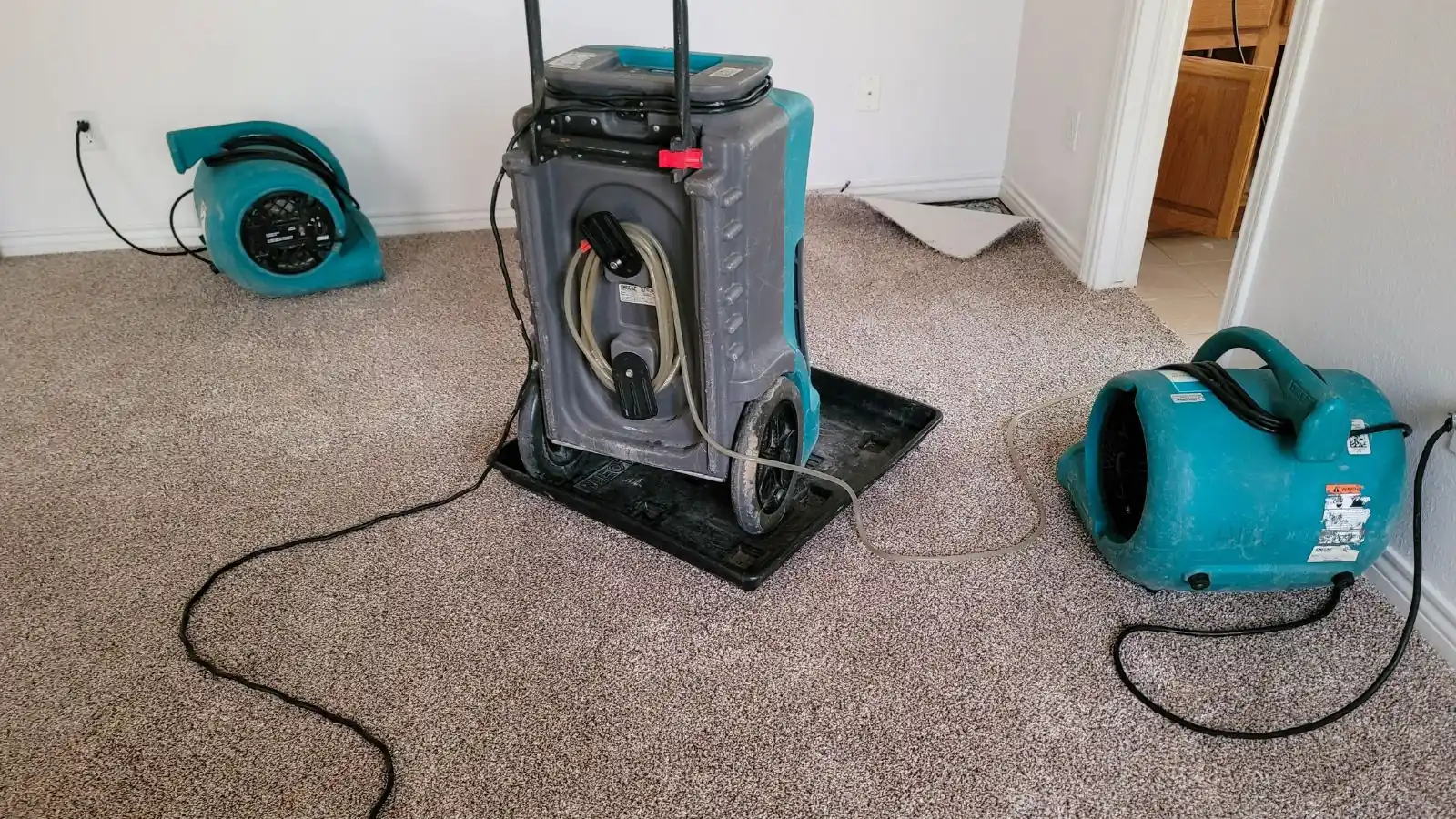
Use dehumidifiers and airflow, as described on our structural drying page.
Remove what cannot be dried
Wet carpet pad, insulation and crumbling drywall may need to come out.
Clean hard surfaces
Wash with detergent and water, then dry.
EPA guidance says to dry water-damaged areas within 24 to 48 hours. If a smell appears after that window, assume something is still wet and look more closely.
What does not work
- Spraying fragrances, which mask but do not remove.
- Painting over stains, which can trap moisture.
- Running fans in a humid season without dehumidification.
- Ozone machines used without guidance.
- Waiting for the smell to fade on its own.
Odor products have their place after drying and cleaning. Used earlier, they delay the real fix.
When to call for help
Signs you need a professional
- The smell has lasted more than a few days after a leak.
- Drywall or flooring is soft, stained or bubbling.
- You see dark spots that keep returning.
- You cannot find the source.
- The smell is strong in a finished basement or a closed wall.
A professional can check moisture inside walls and under floors. If the area is large or the growth is visible, our mold remediation page explains the next step. For carpet, see our carpet page.
Smells that are not mold
Not every musty smell is mold. A dry trap in a floor drain can let sewer gas into a basement. A dead animal in a wall, old smoke or a failing sump can also cause odor. If the smell is sharp, like sewage, treat it differently and see our sewage backup page.
A plumber can tell you whether a dry trap is the cause. The fix is often as simple as pouring water into the drain.
A room-by-room plan
In a basement, start at the floor. Check the slab for damp patches, look behind stored boxes and test the sump and floor drain. In a kitchen, empty the cabinet under the sink and run a hand along the back and bottom of the cabinet. In a closet, take everything out and look at the wall behind it, since stored clothes keep air from moving.
In a bedroom with a ceiling stain, look in the attic if you can. Wet insulation above a stain is common and has a distinct cold, damp feel. If you cannot reach the source safely, ask for a moisture assessment instead of guessing.
Fabrics and contents
Clothes, books and upholstery hold odor after a damp spell. Washable items can go through the wash with detergent and be dried completely. Books and papers that were wet for days often cannot be saved. Upholstered furniture is hard to clean after a long damp period, so ask a cleaner what is realistic before you spend money.
Preventing the smell from returning
Keep a hygrometer in the basement and aim for humidity below about 50 percent. Run a dehumidifier in humid months, and empty or drain it on a schedule. Keep stored items off the floor and away from exterior walls, so air can move. If the smell returns, treat it as a new alert and look for fresh moisture.
When the smell comes from the HVAC system
If the smell appears when the heat or air runs, check the drain pan, the filter and the ductwork. A pan with standing water, a wet filter or damp insulation around a duct can all produce odor. An HVAC technician can inspect, clean and fix the drain.
Change the filter, and look at the area around the air handler for moisture. If the smell is strong and persistent, have a professional look inside the system before you run it for days.
Odor control that actually helps
Air movement and drying do most of the work. Open windows when the weather allows, run fans and use a dehumidifier. Remove wet items that cannot be saved, since they keep releasing odor.
Masking sprays only cover the smell for a while. If the odor returns after cleaning and drying, there is likely still a damp source nearby that needs finding.
Published guidance on odors and dampness
The EPA publishes guidance saying wet materials should be dried within 24 to 48 hours to limit mold growth. A musty odor usually means something is still damp. The ANSI/IICRC S500 standard covers drying methods.
Damp basements in the Shelton area
Heavy rain tests basements. On August 18, 2024, Shelton and Monroe each received just under 10 inches of rain, and the remnants of Hurricane Ida flooded basements across southern Connecticut in September 2021. If a smell appeared after either event, treat it as a sign that something got wet and stayed wet.
In Oxford and Orange, where sump pumps and drain systems matter, check that the pump still works and that the discharge line is clear. A sump that runs all the time or never runs at all is worth a look.
Local odor questions
It may be, but the first suspect is moisture. Check for damp carpet, wet drywall and humidity, and dry the space.
It helps if moisture is the cause. It does not replace finding and fixing the source.
Yes, if moisture returns. Keep humidity low and fix leaks promptly.
We do not give health advice. If you have health concerns, talk to a doctor, and deal with the moisture.